


S130 Model Year Differences
The Datsun 280ZX debuted to mixed reviews despite strong sales. Its evolution from a budget sports car into a more luxurious touring car drew criticism from purists, but it earned mainstream appeal, including Motor Trend's 1979 Import Car of the Year, and set a Z-car sales record in its first year.

Over its five model years (1979–1983) the S130 changed engines, heads, transmissions, steering, wheels and trim. This page walks through the changes year by year, then compares the turbo and non-turbo cars and each system side by side.
Year by Year
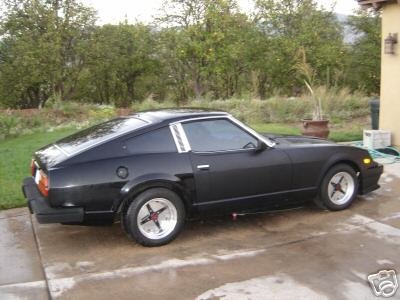
1979
- First year of the 280ZX, in 2-seater and 2+2 bodies.
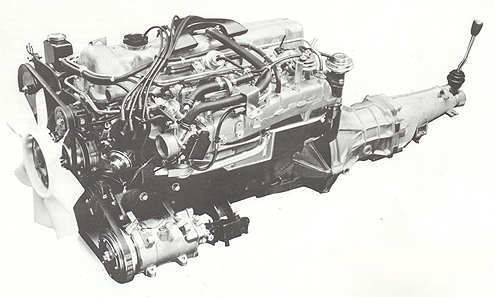
- Fuel-injected L28E with the N47 head and dished pistons: 135 hp.
- 4-speed (F4W71B) or 5-speed (FS5W71B) manual, or 3-speed automatic. 1979 was the only year for the 4-speed.
- Manual rack-and-pinion steering, or power recirculating ball.
- 14" steel wheels with covers, or the "iron cross" alloys.
- Special edition: the 280ZX-R.
1980
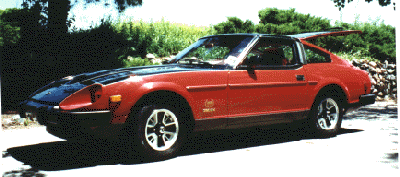
- T-tops became available.
- The 4-speed manual was dropped. Manual cars got the 5-speed.
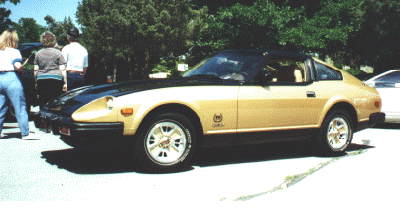
- Special edition: the 10th Anniversary Edition, 3,000 cars.
1981
- New F54 block for all cars.
- Non-turbo: flat-top pistons and the new P79 head raised compression to 8.8:1 and power to 145 hp.
- The 280ZX Turbo debuts: L28ET with a Garrett turbocharger, dished pistons, the P90 head and 7.4:1 compression, for 180 hp. It arrived partway through the model year, automatic only in the US, and brought power rack-and-pinion steering. Its soft suspension was widely criticized for poor cornering.
- The 5-speed changed to the closer-ratio FS5W71B ratios (taller 5th gear).
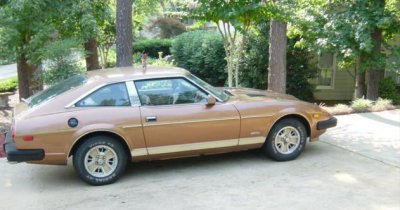
- New wheels: the six-spoke 14" alloy on non-turbo cars and the 15" "snowflake" alloy with 205/60R15 tires on the Turbo.

1982
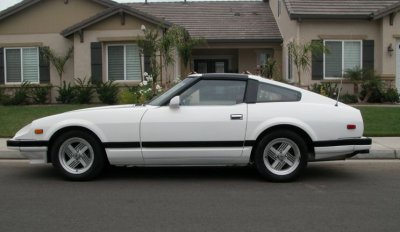
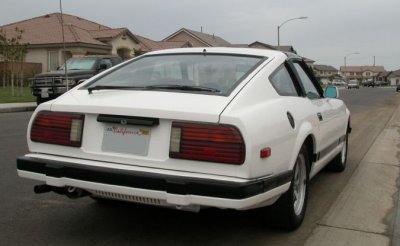
- Facelift: revised hood scoops and pillar trim.
- Power rack-and-pinion steering, introduced on the 1981 Turbo, replaced the power recirculating ball system on non-turbo cars. Manual rack-and-pinion stayed available.
- The Turbo got a 5-speed manual, the Borg-Warner-built FS5R90A, and revised suspension that fixed the 1981 car's handling complaints.
- New 15" alloy wheel for the Turbo.
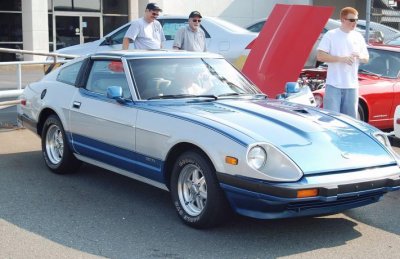
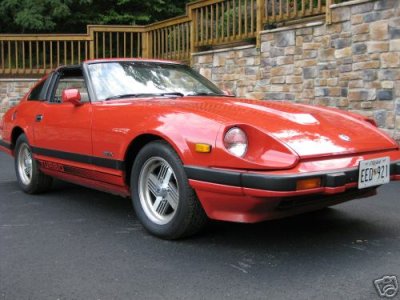
The rear of the car also changed with the facelift:
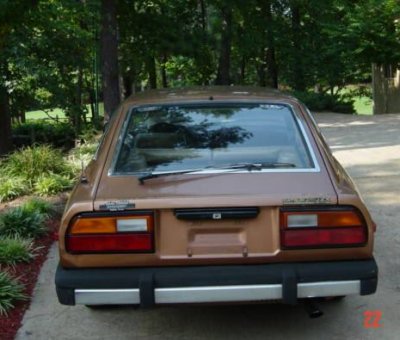
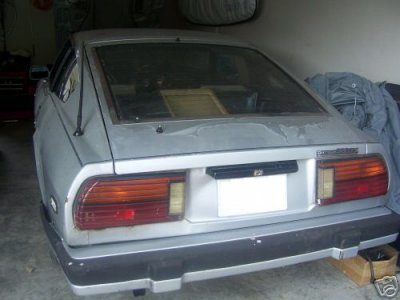
1983
- Last year of the S130. The 300ZX (Z31) replaced it for 1984.
- Late in the year the Turbo switched to the P90A head, designed for hydraulic lifters.
- Minor changes otherwise. Some sources report wider tires and revised shock absorber rates.
Special Editions

1979 280ZX-R
1,008 built to homologate the rear spoiler used on Datsun's SCCA and IMSA race cars. Silver mist metallic paint with three-tone blue stripes, the rubber rear wing, all-black interior, 5-speed, manual steering and steel wheels. Air conditioning was the only option. Mechanically the same as a standard 280ZX.
1980 10th Anniversary Edition
3,000 cars based on the GL: 2,500 in black and gold with tan leather, and 500 in black and red with burgundy leather. Numbered dash plaque, painted wheel accents, T-tops, headlamp washers, upgraded stereo, automatic climate control and blacked-out trim.
Datsun also supplied a silver, black and red 280ZX Turbo pace car for the Caesars Palace Grand Prix in 1981 and 1982. It was a promotional car rather than a production edition. Production totals by year are on the Production Numbers page.
Turbo vs. Non-Turbo (1981–1983)
| Non-Turbo | Turbo | |
|---|---|---|
| Engine | L28E | L28ET |
| Power | 145 hp | 180 hp |
| Compression | 8.8:1 | 7.4:1 |
| Block / pistons | F54, flat-top pistons | F54, dished pistons |
| Power steering | Recirculating ball (1981), rack and pinion (1982–83) | Rack and pinion, all years |
| Head | P79 | P90; P90A late 1983 |
| Manual transmission | FS5W71B 5-speed (close ratio) | None in 1981; FS5R90A 5-speed (wide ratio) 1982–83 |
| Automatic | 3-speed 3N71B | 3-speed 3N71B, with extra clutch plates, a larger band and higher stall speed |
| Differential | R200 3.9 (manual), R180 3.545 (automatic) | R200 3.545 |
| Wheels / tires | 14" six-spoke alloy or steel, 195/70R14 | 15" alloy, 205/60R15 |
The Turbo was also badged differently: "280ZX TURBO" fender emblems and a "TURBO" emblem on the hatch. See Badges and Emblems.
Engine and Head Differences
| Years / model | Block | Pistons | Head | Compression | Power |
|---|---|---|---|---|---|
| 1979–1980 | N42 | Dished | N47 | 8.3:1 | 135 hp |
| 1981–1983 non-turbo | F54 | Flat-top | P79 | 8.8:1 | 145 hp |
| 1981–early 1983 Turbo | F54 | Dished | P90 | 7.4:1 | 180 hp |
| Late 1983 Turbo | F54 | Dished | P90A | 7.4:1 | 180 hp |
When Was the P90 Head Used?
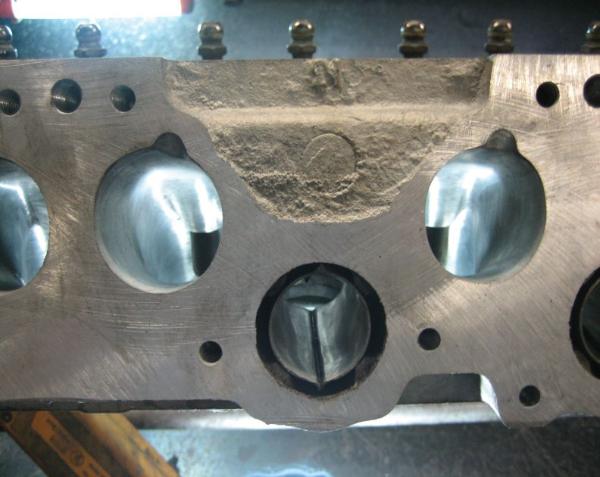
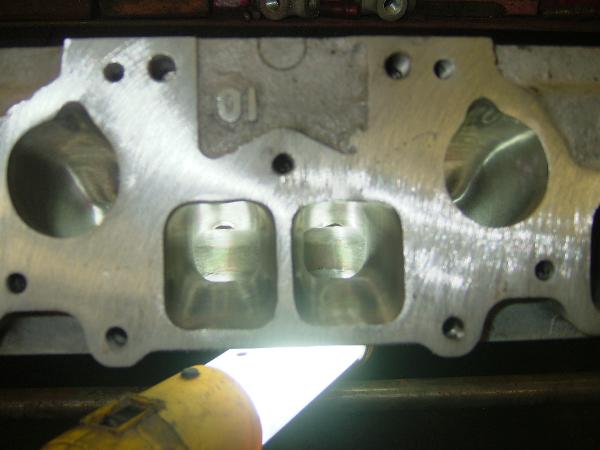
The P90 came only on the 280ZX Turbo, from its introduction in 1981 until partway through the 1983 model year. Late 1983 Turbos got the P90A, a version designed for hydraulic lifters, though many early P90A heads were fitted with solid lifters.
The P90 has the same 53.6cc combustion chambers as the non-turbo P79, but square exhaust ports like the early N42 head. That flow, plus the internally oiled cam, makes it one of the most sought-after L-series heads. With the Turbo's dished pistons it gives low compression, so on a non-turbo build it's usually paired with flat-top pistons. See Head Differences, Engine Specifications and The Great L28 Turbo Guide.
Transmission Differences
| Transmission | Type | Used In |
|---|---|---|
| F4W71B | 4-speed manual | 1979 only |
| FS5W71B | 5-speed manual | 1979–1980 (0.864 5th) |
| FS5W71B | 5-speed manual, close ratio | 1981–1983 non-turbo (0.745 5th) |
| FS5R90A | 5-speed manual, wide ratio, Borg-Warner built | 1982–1983 Turbo |
| 3N71B | 3-speed automatic | All years; Turbo version strengthened |
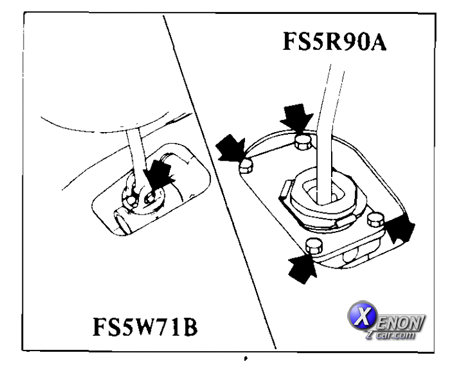
Gear ratios, how to tell the FS5W71B from the FS5R90A, and the automatic's turbo/non-turbo differences are on the Transmission Differences page. Rear end ratios by year are on the Differential Differences page.
Steering Differences
| System | Years | Ratio | Turns Lock to Lock |
|---|---|---|---|
| Manual rack and pinion | 1979–1983 | 19.6:1 | 3.5 |
| Power recirculating ball | 1979–1981 non-turbo | 16.3:1 | 2.7 |
| Power rack and pinion | 1981 Turbo; all cars 1982–1983 | 17.8:1 | 3.2 |
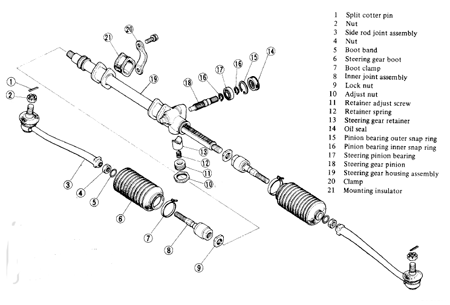
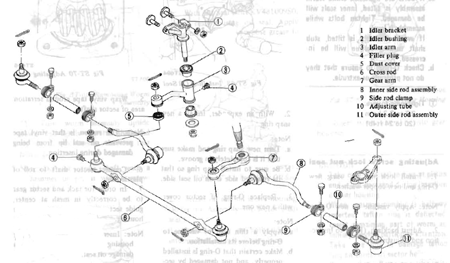
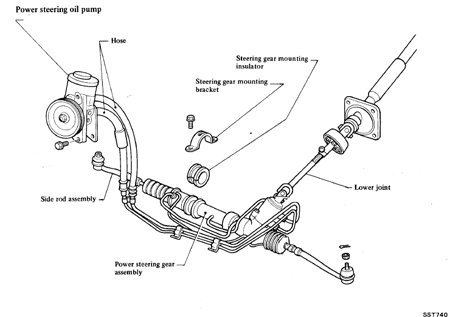
More detail on the Steering Differences and Power Steering pages.
Wheel Differences
All factory wheels use the 4 x 114.3mm bolt pattern.
| Wheel | Offered On | Stock Tire |
|---|---|---|
| 14" steel with covers | 1979–1983 | 195/70R14 |
| 14" "iron cross" alloy | 1979–1980 | 195/70R14 |
| 14" six-spoke alloy | 1981–1983 non-turbo | 195/70R14 |
| 15" "snowflake" alloy | 1981 Turbo | 205/60R15 |
| 15" Turbo alloy | 1982–1983 Turbo | 205/60R15 |
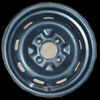
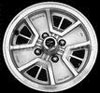


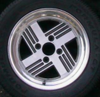
Offsets, weights, part numbers and photos are on the Wheel Differences page.
Seat Differences
- Two front seat styles: a low-back seat with a separate, adjustable headrest, and a high-back bucket with the headrest built in. Upholstery kits for both styles are listed for 1979–1983, and the two need different kits.
- Materials: vinyl, cloth or velour on most cars. Leather came on the 10th Anniversary Edition (tan on the gold cars, burgundy on the red cars).
- 280ZX-R: all-black interior.
- 2+2 cars have a rear seat; 2-seaters have a storage area instead.
Want more support? See the CRX seat swap.
Body Types
There were 4 different body types of the S130 chassis:
- Slick Top 2-Seater
- Slick Top 4-Seater (2+2)
- T-Top 2-Seater (1980–1983)
- T-Top 4-Seater (2+2) (1980–1983)
From the windshield forward, both chassis were the same. The 2+2 models add 7.8 inches from the doors back. This changes the roofline and rear quarter windows, and gives the 2+2 a shorter rear hatch.
Trim Options
There were two main trim options available on the 280ZX: Base and GL.
- Base Model: Manual windows, manual climate control, cloth seats, and manual steering. Optional upgrades included power steering and windows.
- GL (Grand Luxury): Included power windows, power locks, upgraded interiors, and optional automatic climate control. Power steering was standard.
Sources Used
- 1979-1983 280ZX Nissan Factory Service Manuals
- XenonZcar's engine, head, transmission, differential, steering and wheel pages
- Originally published on XenonS130.com (2006)
- Wikipedia: Nissan Fairlady Z (S130)
- Motorsports Auto (The Z Store) seat upholstery listings