


Foreign Invasion: The Datsun 280ZX Funny Car Era
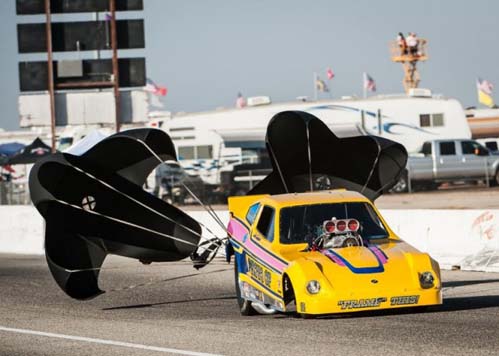
In October 1979 the NHRA changed its Funny Car rules to allow foreign car bodies from 1975 or newer. Imported cars were selling well in America by then, and a few racers saw something in the low, sleek, slope-nosed Datsun 280ZX: it looked like it could be a very fast Funny Car.
From 1980 to 1983 a small group of teams ran 280ZX bodies, in the nitro AA/FC class and in alcohol BB/FC. They were competitive rather than dominant, and the Mustangs, Trans-Ams, Arrows and Challengers of the day stayed in the field. Even so, the ZX won races, set a national record and gave one team four NHRA national event wins in a row.
At a Glance
- Rule change
- NHRA, October 1979: foreign bodies, 1975 or newer, allowed on Funny Cars
- First 280ZX teams
- John Collins, Gary Densham and Tim Grose (1980 season)
- Best NHRA nitro result
- Tim Grose, runner-up at the 1982 Gatornationals (the only Datsun AA/FC in an NHRA national event final)
- Most successful ZX
- Vern Moats’ Hamm’s BB/FC: four NHRA national event wins in a row in 1983 and a 6.36-second, 236 mph national record
- End of the era
- After 1983, as Funny Car bodies moved further from the street cars, the ZX teams went back to American bodies
The First Three: Collins, Densham and Grose
As the 1980 season opened, three veteran AA/FC teams had 280ZX bodies on the strip or being built.
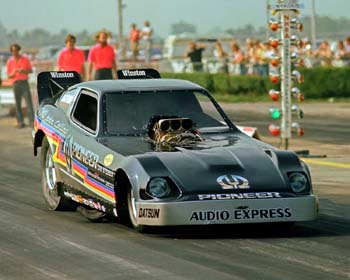
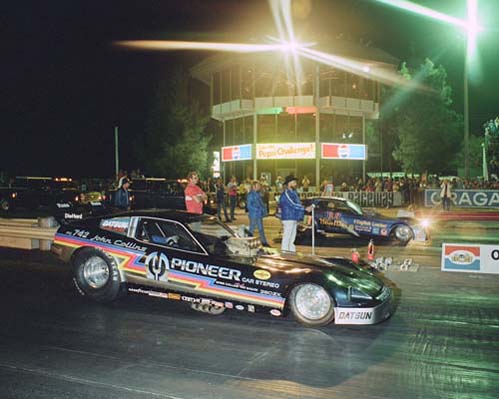
John Collins had been sponsored by Pioneer car stereos since 1978, first in a Plymouth Duster and then in a Trans-Am. Pioneer was also backing the Datsun factory road race team at the time, so a Datsun body was a natural fit, and Collins got some help from Datsun as well. His was the only ZX team with real sponsorship and factory support, and his car was the first one out.
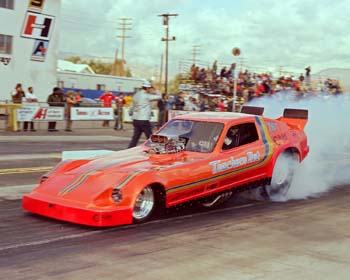
Gary Densham built his own. He spent about six months on the plug for the body, which was made at chassis builder Ken Cox’s shop, and he hoped a Datsun would bring in factory money.
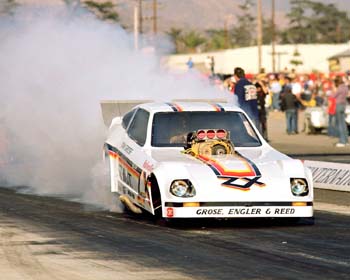
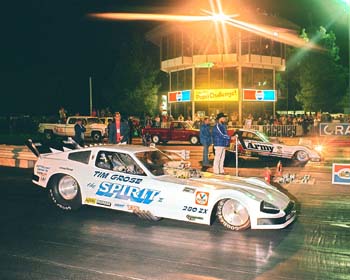
Tim Grose, who ran an engine shop in western Michigan, picked the ZX for a different reason: he liked trying unusual things, and he thought the shape would work well aerodynamically. It worked almost too well. The body made so much downforce that it once broke in half.
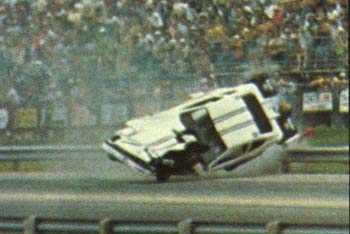
Grose debuted his car at the 1980 Bakersfield March Meet, the same event where Collins’ original Datsun was destroyed. Collins already had a second car being built. Grose patched his body back together, then had a far bigger crash at the 1980 NHRA Springnationals when the throttle stuck wide open during qualifying. He walked away more or less unhurt and built a new ZX from scratch.
Competitive, Not Dominant
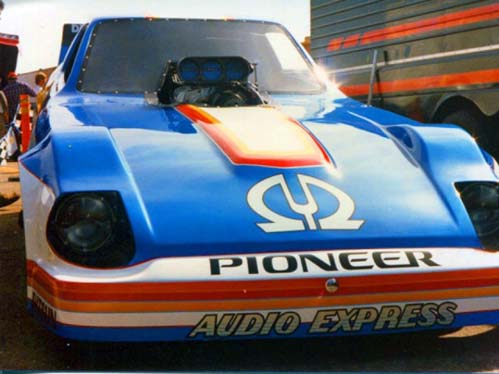
Collins ran mostly on the AHRA circuit and won two of the last three races of its 1981 Grand American series. He later said the body was probably the slickest out there, and that the car should have run even better: his crew found that a main fuel injector jet had been left out for about three and a half months. The car had been running lean the whole time and broke a lot of expensive parts. After two seasons Pioneer moved its sponsorship to Shirley Muldowney for 1982. Collins sat that year out while he set up a deal with JVC, and the Datsun ran just one race in JVC colors in 1983 before JVC asked for an American body. It was replaced by a Chevy Camaro.
Densham raced the ZX for three years, almost all on the West Coast. His best results were runner-up finishes at a 64-car show at Irwindale and a 1981 AHRA race at Spokane. The Datsun also got him into his first NHRA national event, the 1982 World Finals at Orange County International Raceway. A year earlier he had ridden out one of the biggest fires of the era while trying to qualify at the World Finals, a photo of which made the cover of Super Stock and Drag Illustrated. He said the ZX drove much better than his old Trans-Am. With no sponsor money coming, he ran two races in Australia, sold the Datsun to a BB/FC racer there and bought a Plueger-built car, which he ran with a Dodge Omni body for 1983.
Grose won the 1981 NHRA Division 3 Funny Car title. At the 1982 Gatornationals he reached the final round and lost to Frank Hawley, the only time a Datsun AA/FC made the final of an NHRA national event. He also ran well at IHRA events and match races. Datsun never gave him any help, though, and after talking with General Motors he switched to a Corvette for 1983.
Densham and Grose both stopped running Datsun bodies after 1982, the same time Collins was moving on. Even at a time when American car makers were struggling against Japanese imports, all three said they could not remember fans booing the Datsun.
The Other ZX Teams
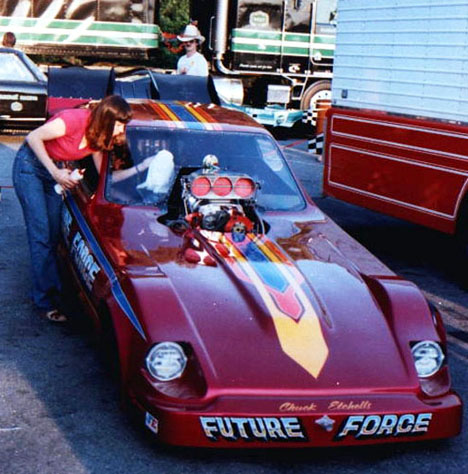
Other racers tried the ZX body too. In nitro, Chuck Etchells (who in 1993 became the first Funny Car driver to run in the four-second range) replaced his aging Chevy Monza with the “Future Force” Datsun and ran it on the East Coast for several years, and Midwest veteran Dale Tuter ran his “Quik Trip” car as a 280ZX.
Datsun Funny Cars raced in Europe as well, driven by Englishman Ron Picardo and Swede Lee Anders Hasselstrom, who was sponsored by the Swedish Air Force. Neither had much success with it.
In alcohol BB/FC, North American Datsuns included cars run by future world champion Fred Mandoline, Billy Williams and Cookie Kazanjian, and Nick Boninfante’s “U.S. Male.”
Vern Moats: The Biggest ZX Success
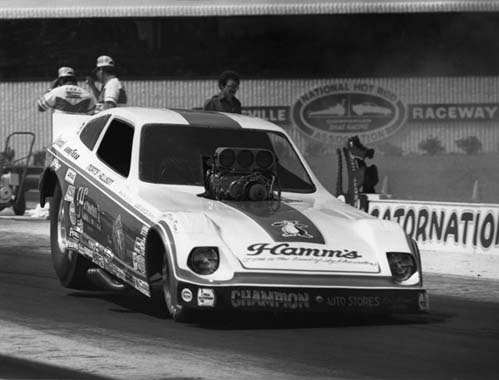
The strongest 280ZX of them all came from Vern Moats of Des Moines, Iowa, one of the first alcohol Funny Car drivers and well known in Division 5 for his “Smoke ’n’ Thunder” and “Oly Roller / Iowa Roller” cars. He was rebuilding after a bad crash at the 1981 Gatornationals, had a new sponsor in Hamm’s beer, and was no stranger to foreign cars: early in his career he had raced a B/Altered Jaguar. He had been using Ken Cox bodies, and when Cox brought out the Datsun, its streamlined shape appealed to him.
Moats ran the ZX from 1982 and won two AHRA national events that year. The car really came good in the second half of 1983. He won the NHRA event at Denver, his first NHRA national win and the Datsun’s, then won his next four races: a Division 5 race in Nebraska and the NHRA NorthStar, U.S. and Golden Gate Nationals. At Golden Gate he set both ends of the BB/FC national record, 6.36 seconds at 236 mph. He credited Bob DeVour of Hurst for some of it: when the car kept wanting to wheelstand, DeVour told him to add weight to the front instead of loosening the clutch.
That was the Datsun’s last big season. Funny Car bodies were getting further and further from the street cars they were named after, nobody reworked the ZX shape to keep up, and Moats went back to an American body. He still remembers the Datsun fondly and has said that if he ever ran a nostalgia car, it would be a ZX.
The ZX Today
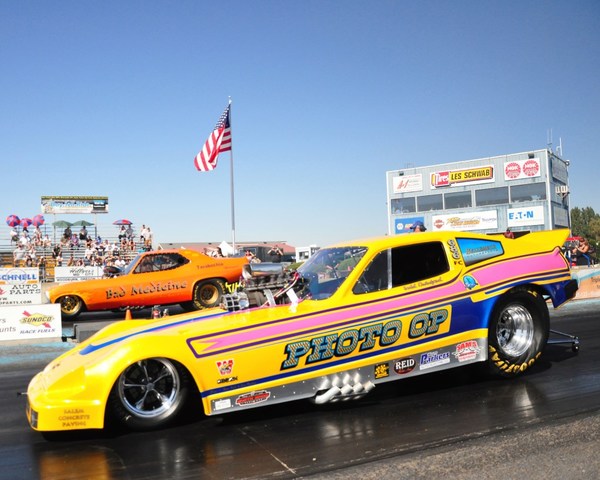
The 280ZX shape still turns up at nostalgia drag racing events, a reminder of the few years when a Datsun could run with the American bodies in Funny Car.
Sources Used
- Based on the article “Foreign Invasion: The Datsun 280ZX Funny Car Era” from Competition Plus, rewritten in our own words
More 280ZX history: S130 Color and Trim Chart · 280ZX registry