
Z32 Body Differences by Year
The Z32 kept the same basic shape for its whole life: 1990 to 1996 in the US, and 1989 to 2000 in Japan as the Fairlady Z. The changes are in the details, and in the body styles on offer. This page sorts out what changed when, including the late Japanese cars that never came to the US. For the cabin, see interior differences.
Body Styles
- 2-seater T-top (2+0): the original body, with two removable glass roof panels. Available non-turbo and twin turbo.
- 2+2 T-top: a longer wheelbase and longer body with a small rear seat. Non-turbo only in the US; Japan also sold a 2+2 twin turbo.
- 2-seater slicktop (hardtop): a solid roof, added during 1991 in the US, non-turbo only. Japan also had a rare twin turbo slicktop.
- Convertible: launched in August 1992 for the 1993 model year, built from the 2-seater, non-turbo, with a manual soft top and its own trunk lid.
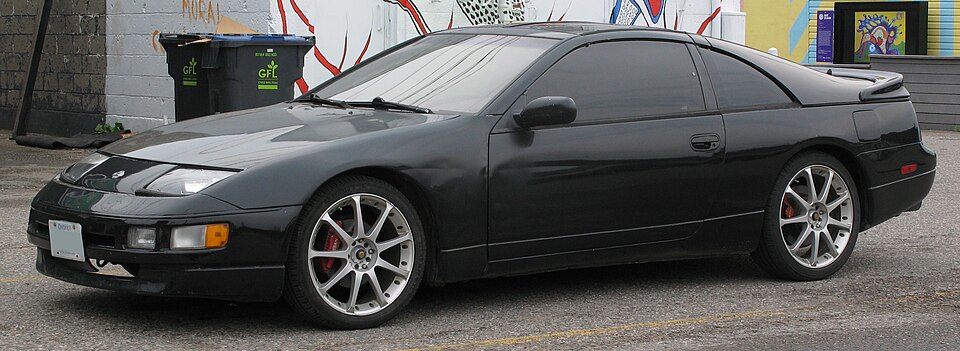
Photo: Elise240SX, CC BY-SA 4.0, via Wikimedia Commons (resized).

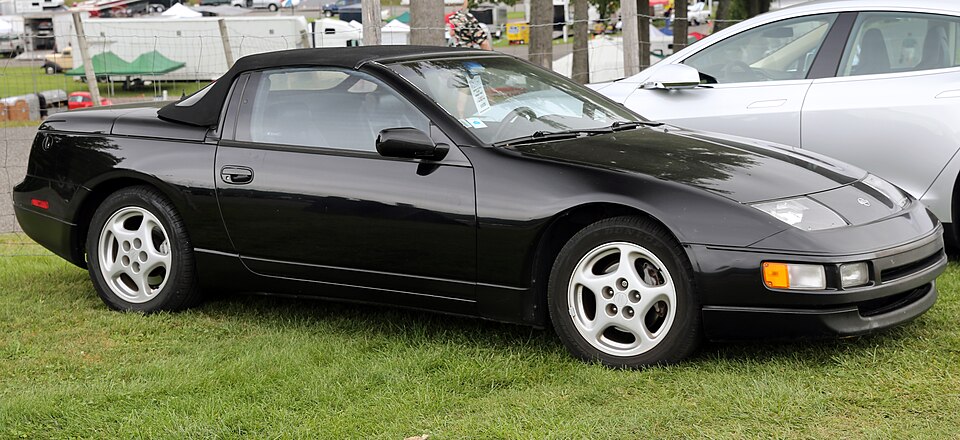
Photo: Mr.choppers, CC BY-SA 3.0, via Wikimedia Commons (resized).

Dimensions
| 2-seater | 2+2 | Convertible | |
|---|---|---|---|
| Length | 4,310 mm (169.7 in) | 4,525 mm (178.1 in) | 4,310 mm (169.7 in) |
| Width | 1,790 mm (70.5 in) | 1,800 mm (70.9 in) | 1,790 mm (70.5 in) |
| Height | 1,250 mm T-top, 1,245 mm slicktop | 1,255 mm (49.4 in) | 1,255 mm (49.4 in) |
| Wheelbase | 2,450 mm (96.5 in) | 2,570 mm (101.2 in) | 2,450 mm (96.5 in) |
| Front track | 1,495 mm (58.9 in) | ||
| Rear track | 1,535 mm NA, 1,555 mm TT | 1,535 mm (60.4 in) | 1,535 mm (60.4 in) |
The twin turbo's wider rear track comes from its wider, lower-offset rear wheels. See wheels and tires.
US Changes, 1990–1996
| Year | Exterior and body changes |
|---|---|
| 1990 | Launch. 2-seater and 2+2 T-tops; non-turbo and twin turbo. |
| 1991 | Nissan logo added to the nose. Slicktop (hardtop) 2-seater added mid-year, non-turbo only. |
| 1993 | Convertible added. |
| 1994 | Taller, pedestal-mounted rear spoiler. The original off-white Pearl paint was dropped; later pearl whites are more metallic. |
| 1995 | The front bumper's gray strip became body-colored. |
| 1996 | Final US year. The last 300 cars were the numbered Commemorative Edition. |
Early vs late, side by side
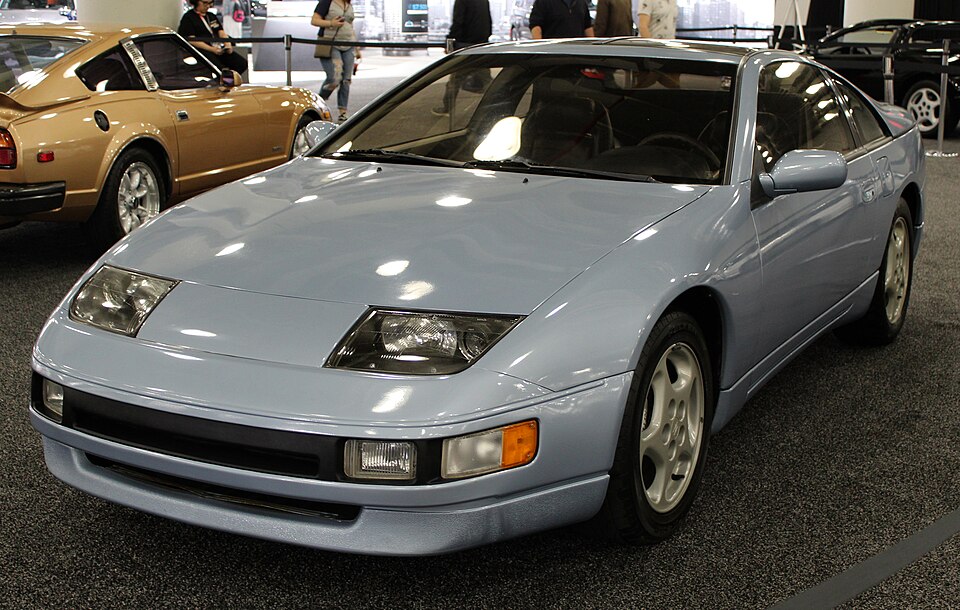
Photo: Kevauto, CC BY-SA 4.0, via Wikimedia Commons (resized).

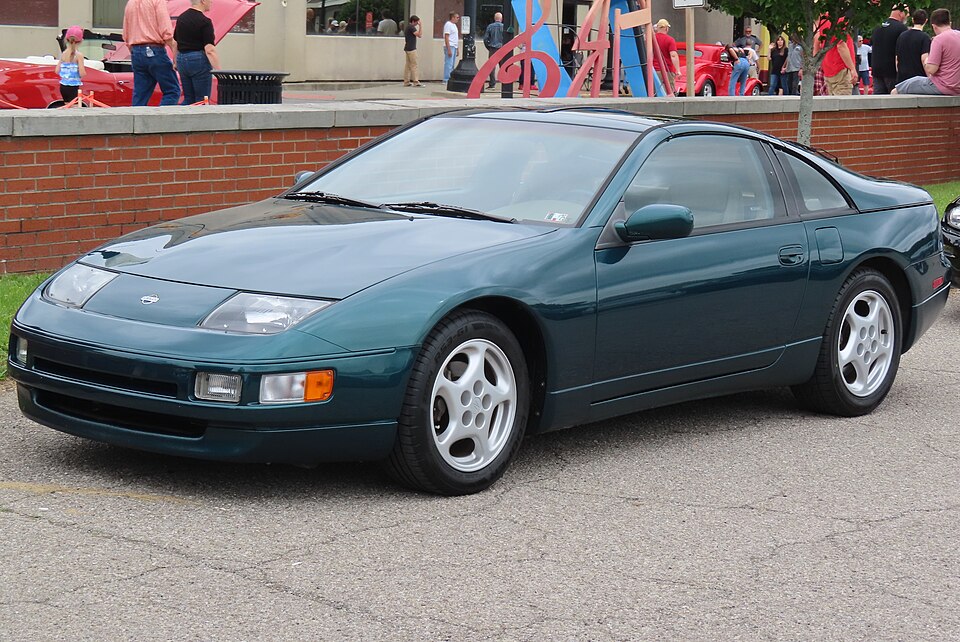
Photo: MercurySable99, CC BY-SA 4.0, via Wikimedia Commons (resized).

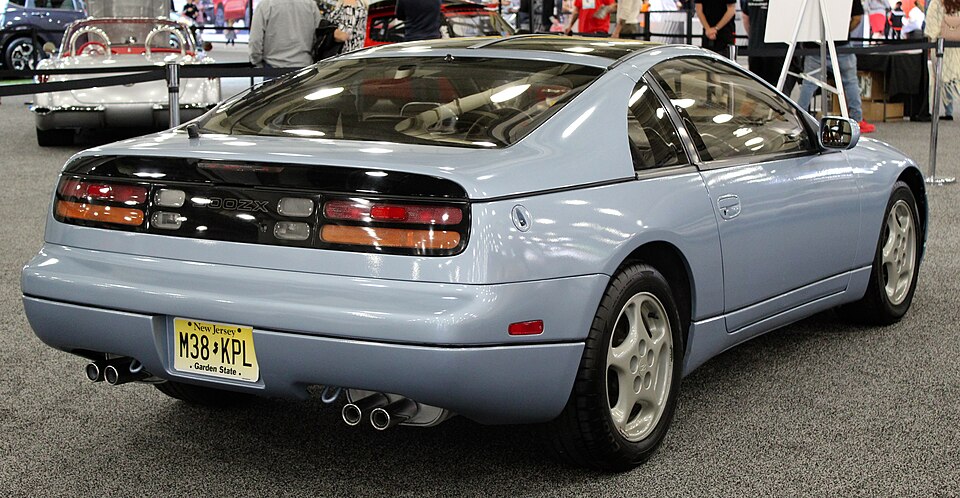
Photo: Kevauto, CC BY-SA 4.0, via Wikimedia Commons (resized).

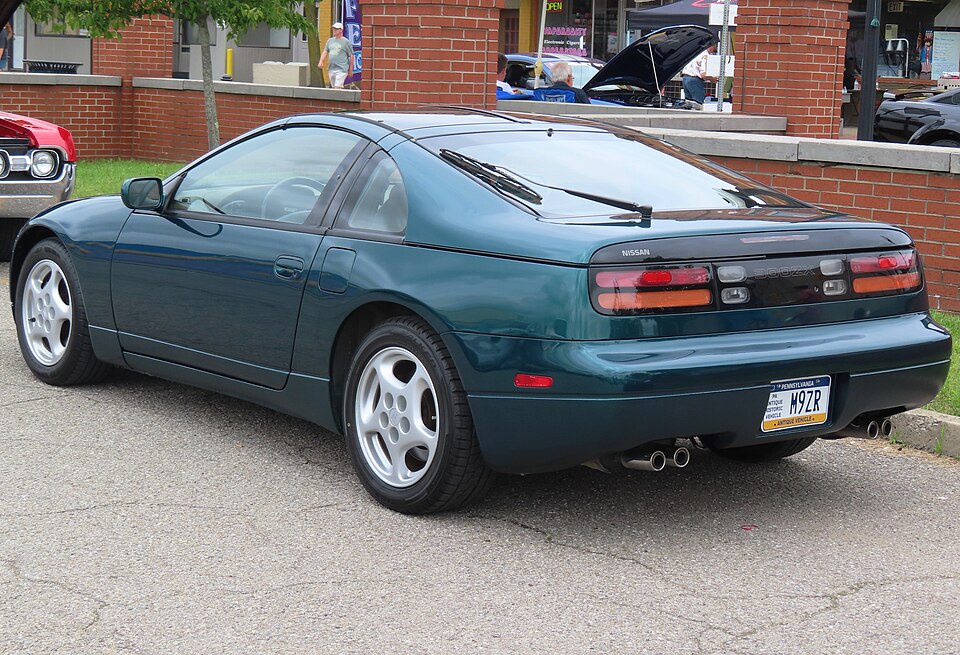
Photo: MercurySable99, CC BY-SA 4.0, via Wikimedia Commons (resized).

Changes often arrived partway through a model year, so a car's build date (on the door jamb label) tells you more than its model year. The VIN lookup on our Z32 VIN registry decodes the year, model and body.
Japan: Fairlady Z, 1989–2000
Japanese production continued for four years after US sales ended, and the late cars picked up changes the US never saw.
| Period | Changes |
|---|---|
| 1989 | Launch in Japan (July 1989), rated 280 PS (twin turbo) and 230 PS (non-turbo). |
| 1992 | Convertible added in August. |
| Mid-1990s | Version S grade introduced: a lighter-equipped grade with options ordered separately. 16-inch BBS mesh wheels became available. |
| 1997–98 model years | The twin turbo's front bumper used on all models. Version R grade introduced (2+2 only). T-top and automatic options dropped from the 2-seaters. |
| Late 1998 facelift (1999–2000 model years) | New front bumper with optional xenon HID headlights, new taillights and rear spoiler. Version R side skirts. Stronger floor and structural members and a large central cross member. Convertible dropped. |
| August 2000 | Production ended. |
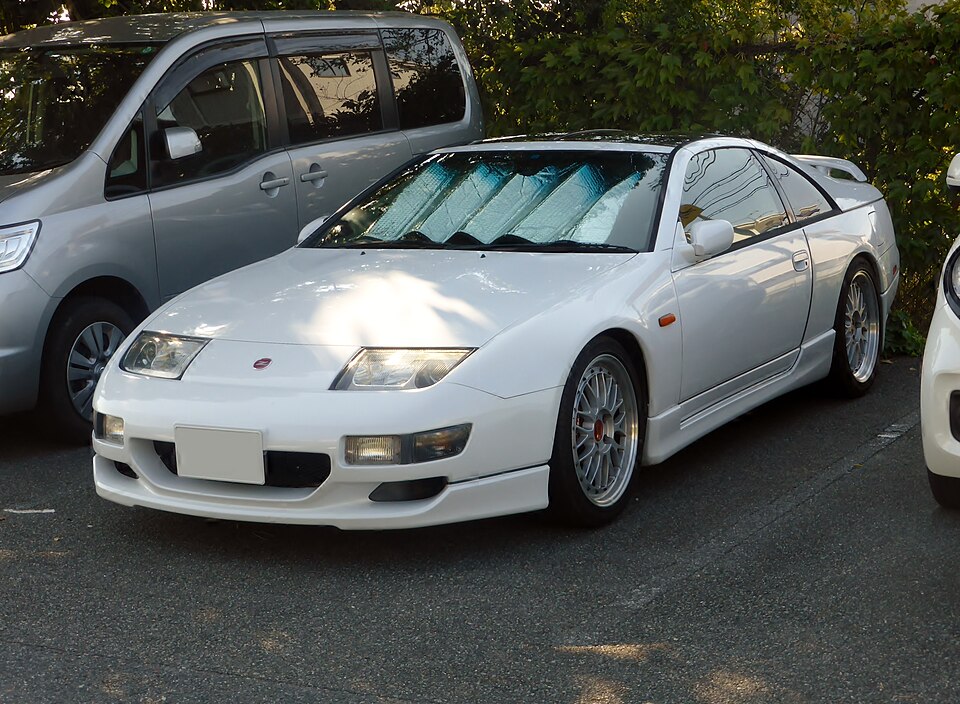
Photo: Tokumeigakarinoaoshima, CC0 1.0, via Wikimedia Commons (resized).

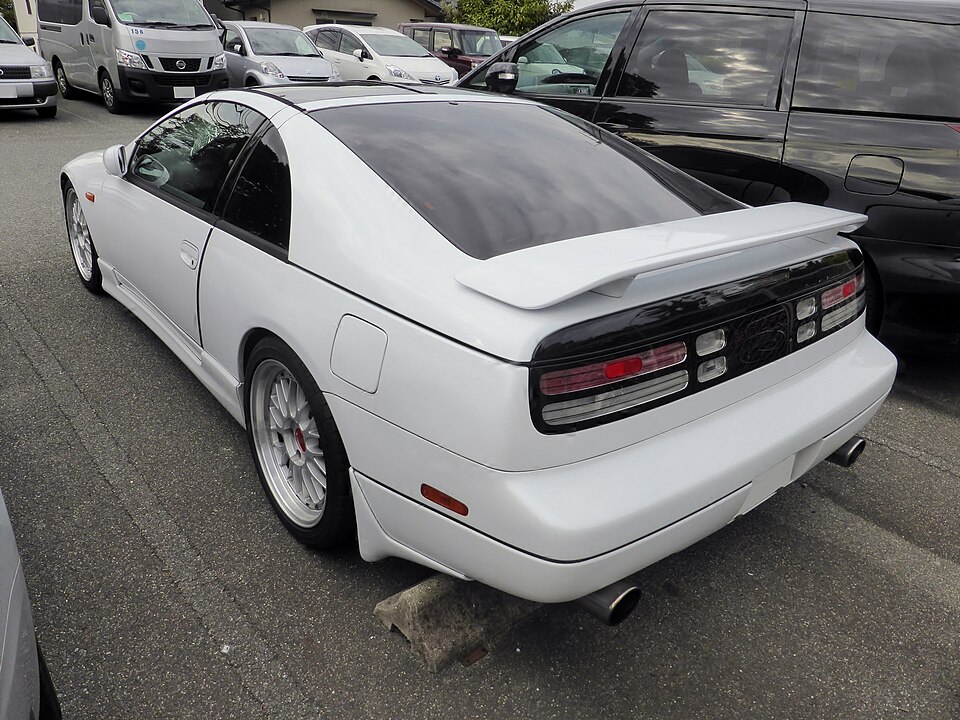
Photo: Tokumeigakarinoaoshima, CC0 1.0, via Wikimedia Commons (resized).

Other JDM differences
- Japanese cars used a fiberglass front bumper reinforcement instead of the US cars' steel one, and lighter catalytic converters (one set on the twin turbo, where US cars had two). Japanese cars are often 100 lb or more lighter than the equivalent US car.
- Right-hand drive, with Japanese-market lights, mirrors and badging.
- Many JDM Z32s have now been imported to the US under the 25-year rule, so late-model facelift cars are turning up here.
Sources Used
- Nissan 1994 and 1996 300ZX service manuals, GI section (dimensions). Read the GI section
- Wikipedia, Nissan 300ZX: body styles, US and JDM changes by year, JDM construction.
- The owners' change list on 300zx-owners.club.
- Japanese launch and production dates: JDM Buy Sell Fairlady Z (Z32) guide.